
Tutorials
Table of Contents
- Venue
- IEEE Continuing Education Initiative
- Sub-Theme #1: High-Speed Interconnect and Clock Circuits for AI Computing Infrastructures
- Introduction to High-Speed SerDes Communications
- Clock Generation Techniques for High-Speed Wireline Transceivers
- Design of Power-Efficient Reference-less PAM4 CDR for Ultra-High-Speed Wireline Communication
- Clock and Data Synchronization Techniques for High-Performance Interconnection
- High-Speed Ultra-Low Latency Mixed-Signal SerDes Transceiver Design Techniques for AI Computing Infrastructures
- Optical Receiver Front-Ends for AI Interconnect: Scenarios, Tradeoffs, and Design Guidelines
- Sub-Theme #2: AI-Enabled IC Design Automation and Intelligent Hardware Architectures
- AI-Driven Shift-Left for Circuit and System Design
- AI for Analog IC Design Automation: Evolution and Open Challenges
- Bio-inspired neuromorphic olfaction: From algorithms to chips
- Product-Ready Neuromorphic MCU at the Sensor Edge
- Hardware-Assisted Verification for Next-Generation AI Hardware Accelerators
- Reconfigurable Accelerator Design for Multi-Precision Floating-Point Computing: From Processing Elements to SME-Oriented Architectures
- AI-Driven EDA: Reshaping Chip Design in the AI era
The tutorials are free of charge. Please register here.
Venue
- Time: Monday, September 14, 2026 (Full day)
- Location: Vietnam National University, Hanoi (Xuan Thuy Campus)
- Address: 144 Xuan-Thuy Road, Cau Giay Ward, Hanoi, Vietnam
IEEE Continuing Education Initiative
Earn IEEE Continuing Education Credits at AICAS 2026
AICAS 2026 invites all attendees, especially students and professionals, to participate in eligible tutorials and workshops offered through the IEEE Continuing Education initiative. These educational activities are designed to enhance the value, participation, and quality of the conference learning experience.
By attending an eligible tutorial or workshop and satisfying the applicable participation requirements, attendees can receive an official IEEE certificate documenting Continuing Education Units (CEUs) or Professional Development Hours (PDHs). These recognized credentials validate a commitment to continuous learning and can strengthen academic and professional profiles.
Why Participate?
- Recognition and Credibility
Enhance your professional qualifications with IEEE-certified credentials that formally recognize your commitment to lifelong learning. Attendees can add these qualifications to their academic or professional profiles, increasing their credibility and distinction in the field. - Greater Value from Participation
The Continuing Education initiative adds value beyond the standard conference experience, making eligible tutorials and workshops especially beneficial for students and professionals. - High-Quality Educational Content
Eligible tutorials and workshops are held to rigorous IEEE standards, supporting high-quality content and a rewarding learning experience. - Globally Respected IEEE Recognition
An IEEE-branded certificate is a mark of excellence that aligns your professional development with IEEE’s globally respected reputation. Whether you want to broaden your expertise, earn recognized continuing education credentials, or connect with peers, AICAS 2026 tutorials and workshops provide a valuable platform for professional development aligned with IEEE Continuing Education standards. Take this opportunity to invest in your future.
Sub-Theme #1: High-Speed Interconnect and Clock Circuits for AI Computing Infrastructures
Introduction to High-Speed SerDes Communications
Quan Pan
Southern University of Science and Technology, China
Abstract: Low-power wireline integrated circuits have become extremely attractive since they are extensively adopted in high-speed communications, such as local area networks, board-to-board, and data center-to-data centers. Basic concepts in high-speed SerDes are elaborated, including transceiver architecture and fundamentals, modulation, and channel. Then, energy-efficient high-speed links with sophisticated equalizations are studied, including analog front-ends, high-speed drivers, and finally crosstalk cancellations among multi-channel systems are discussed.
 Biography: Quan Pan (Senior Member, IEEE) received his B.S degree in Electrical Engineering (EE) at University of Science and Technology of China (USTC) in 2005, and his Ph.D. degree in Electronics and Computer Engineering (ECE) at the Hong Kong University of Science and Technology (HKUST) in 2014. From 2014 to 2018, he was Senior Staff Engineer in one Silicon Valley startup company, working on 400GbE high-speed SerDes. He joined in the School of Microelectronics, Southern University of Science and Technology as an assistant professor in 2018 and now a tenured full professor. His research interests include High-speed optical transceiver, wireless and wireline circuit design. Dr. Pan has contributed more than 100 peer-reviewed articles. He received the 2017 Outstanding Young Author Award of IEEE Circuits and System Society. He serves as an active reviewer for many international journals, including JSSC, TCAS, TVLSI, JLT, PTL, JoS, and et al.
Clock Generation Techniques for High-Speed Wireline Transceivers
Hao Xu
Fudan University, China
Abstract: High speed wireline transceivers are critical circuit building blocks enabling the large-scale deployment of scale-up and scale-out data center infrastructures. Generating high-frequency and low-jitter clocks has become increasingly challenging towards 200G/400G data links. This presentation introduces circuit techniques in frequency synthesis, clock distribution, and multi-phase clock generation for high-speed interfaces. Key evolution will be explained in detail.
 Biography: Hao Xu received the B.S. degree in microelectronics from Fudan University, Shanghai, China, in 2010, the M.S. and Ph.D. degrees in electrical engineering from University of California, Los Angeles, in 2012 and 2018, respectively. Between 2017 and 2019, he was with Broadcom Inc., Irvine, CA, USA developing ADC-based high-speed optical transceivers. Between 2019 and 2021, he was with Apple Inc., San Diego, CA, USA developing high performance cellular RF transceivers. He held various part-time positions with Broadcom, Mediatek, Tensorcom during his graduate study. Since 2021, he has been with Fudan University as a faculty member. His research interests include mixed-signal, RF, and analog integrated circuit design.
Design of Power-Efficient Reference-less PAM4 CDR for Ultra-High-Speed Wireline Communication
Zhao Zhang
Institute of Semiconductors, Chinese Academy of Sciences, China
Abstract: Referenceless CDR is flexible and a low-cost and low-power choice for wireline transceiver because it is free of external reference clock along with the global clock distribution network in multi-lane RX. Although referenceless CDR is popular for NRZ applications with the data-rate below 32Gbps, it is still challenging for PAM4 design, thus preventing it from being applicated for over-100Gb/s wireline communication. In this tutorial, we will introduce the basics of NRZ reference-less CDR first, then showing how to migrate NRZ design into the PAM4 counterpart. Finally, three design examples based on the presenters’ recent research progress are breifly reviewed as the classic design examples, including a 64-Gb/s design, a 6-64-Gb/s design and a 112-Gb/s design.
 Biography: Zhao Zhang is now a a Full Professor with the Institute of Semiconductors, Chinese Academy of Sciences, Beijing. His research interests include the design of wireline transceivers, low-jitter and low-power PLLs, and ultra-low voltage ICs for bio/energy-harvesting applications.
Clock and Data Synchronization Techniques for High-Performance Interconnection
Xiaoteng Zhao
Xidian University, China
Abstract: This tutorial focuses on clock and data synchronization techniques for high-performance interconnection, covering serial and parallel interface architectures. For serial interconnections, we review clock and data recovery (CDR) architectures including phase-locked loop (PLL)-based CDR, phase-interpolation (PI)-based CDR, baud-rate CDR, burst-mode CDR, and reference-less CDR, et., al. For parallel interconnection, we emphasize deskew technologies in forward clock (FC) architectures, critical for mitigating skew-induced timing errors in wide-parallel, high-throughput interconnections. This tutorial aims to provides designers with insights to optimize synchronization for next-generation high-performance interconnections.
 Biography: Xiaoteng Zhao, Professor at Xidian University His research focuses on high-speed serial interfaces and chiplet interconnection integrated circuit design. He presides over one Key Program of the Major Research Plan and one General Program funded by the National Natural Science Foundation of China. He has authored over 50 peer-reviewed papers published in top-tier IEEE journals and conferences including ISSCC, JSSC, CICC, TMTT, ESSERC, ASSCC, RFIC Symposium, and TCAS-I. One of his representative works was shortlisted for the Top 10 Semiconductor Research Advances in China (2022). He holds more than 30 authorized patents and software copyrights, and has received three technical innovation awards and best paper honors. He participated in the formulation of two IEEE industry standards and has served on the Technical Program Committee (TPC) of IEEE ICTA for three consecutive sessions.
High-Speed Ultra-Low Latency Mixed-Signal SerDes Transceiver Design Techniques for AI Computing Infrastructures
Xiaoyan Gui
Xi’an Jiaotong University, China
Abstract: AI computing’s explosive growth, driven by trillion-parameter models, has rendered high-speed inter-connections the critical data backbone for modern infrastructures, demanding designs that overcome AI-specific circuit challenges: the need for high-speed ultra-low latency SerDes transceivers to meet ns-level requirements for real-time inference and training. This tutorial provides a focused study on advanced high-speed ultra-low latency mixed-signal SerDes transceiver design techniques tailored to these demands, detailing the implementation of 60Gb/s, 112-Gb/s and up to 200-Gb/s mixed-signal SerDes interfaces (via topology and CDR optimization), thereby equipping researchers, engineers, and graduate students with the systematic knowledge needed to develop high-performance inter-connection circuits for next-generation AI systems.
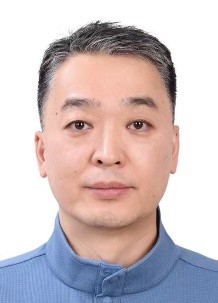 Biography: Xiaoyan Gui (Senior Member, IEEE) received his Ph.D. degree from University of California, Irvine, US., in 2011. He was with Broadcom, Irvine, from 2008 to 2012 where he worked on high-speed SerDes transceiver design as a design engineer and staff scientist. In 2012 he joined the faculty in School of Information and Electronics at Beijing Institute of Technology (BIT), China, and later in 2017 the faculty in School of Microelectronics at Xi’an JiaoTong University (XJTU), China, where he is currently a Full Professor. His research covers CMOS high-speed wireline and wireless communications integrated circuits design. He is the co-author of more than 70 peer-reviewed journal and conference papers including ISSCC and JSSC. He was the recipient of 2007 Henry Samueli Fellowship by the UCI School of Engineering, 2022 National Teaching Achievement Award in Higher Education by Ministry of Education of P. R. China. Dr. Gui serves as TPC co-chair (2022) and TPC chair (2023) of IEEE ICTA.
Optical Receiver Front-Ends for AI Interconnect: Scenarios, Tradeoffs, and Design Guidelines
Dan Li
Xi’an Jiaotong University, China
Abstract: The rapid growth of large AI models is driving increasingly distributed computing platforms, making high-bandwidth, energy-efficient communication between compute nodes more critical than ever. As interconnect becomes a key system bottleneck, the limitations of electrical links in bandwidth density, reach, and power are making optical interconnect increasingly attractive. Meanwhile, optical links are evolving across multiple deployment forms, including pluggable optics, LPO, co-packaged optics (CPO), and optical I/O (OIO). These deployment forms do not impose the same receiver requirements: module-based and LPO links, switch-side or package-proximal CPO links, and compute-proximal OIO links can lead to substantially different design priorities for optical receiver front-ends. This tutorial presents a scenario-driven view of optical receiver front-ends for AI interconnect. The focus is on the receiver side, with emphasis on the front-end tradeoffs that most strongly affect practical designs, including sensitivity, noise, bandwidth, tolerance to input parasitics, dynamic range, power efficiency, and technology choice, especially CMOS versus SiGe. By comparing representative AI optical interconnect scenarios, the tutorial will show how receiver requirements shift with system context and integration level. Attendees will gain a clearer design picture of optical receiver front-ends for AI interconnect, together with practical design guidelines and a forward-looking view of future research and design opportunities.
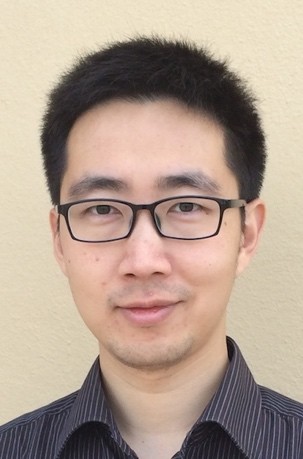 Biography: Dan Li received the B.E. and M.E. degrees from Northwestern Polytechnical University, Xi’an, China, in 2004 and 2007, respectively, and the Ph.D. degree from the University of Pavia, Italy, in 2013. From 2007 to 2009, he worked at NVIDIA Shanghai R&D Center on custom SRAM circuitry. From 2011 to 2014, he was with STMicroelectronics, Pavia, Italy, where he worked on CMOS optical receivers for 100GbE optical links and silicon photonics applications. He joined Xi’an Jiaotong University in 2015 and is currently a professor. His research interests include high-speed optical receivers, low-noise transimpedance amplifiers, 3D sensing, and low-power mixed-signal circuits. He has published in IEEE JSSC, TCAS-I, TCAS-II, JLT, PTL, and ISCAS, and has delivered invited talks and tutorials on low-noise optical receiver front-end design. He currently serves as an Associate Editor of IEEE Transactions on Circuits and Systems II: Express Briefs, and has also served the community in technical and organizing roles for IEEE conferences including ICTA, BioCAS, and ICECS.
Sub-Theme #2: AI-Enabled IC Design Automation and Intelligent Hardware Architectures
AI-Driven Shift-Left for Circuit and System Design
Xinfei Guo
Shanghai Jiao Tong University, China
Abstract: The shift-left paradigm in chip design automation seeks to move physically aware analysis into earlier design stages to improve design quality, reduce iteration costs, and enable predictive digital twins. However, a major bottleneck remains: determining exactly where early prediction is both highly accurate and practically impactful. This tutorial introduces cutting-edge, AI-fused shift-left methodologies spanning critical stages of the EDA flow, from pre-RTL design to signoff, covering both digital and analog regimes. Attendees will explore real-world case studies and state-of-the-art frameworks, including physically aware timing models integrated into logic synthesis, macro connectivity-aware optimization for early routability, fast timing estimation tightly coupled with ECO processes for accelerated closure, and large language model (LLM)-assisted analog circuit sizing. Concluding with a deep dive into the practical opportunities and open challenges—such as model accuracy, cross-node generalization, and seamless EDA toolchain integration—this tutorial equips researchers and practitioners with actionable insights into how AI-driven prediction is actively reshaping modern circuit and system design automation workflows.
 Biography: Xinfei Guo is an Associate Professor at Shanghai Jiao Tong University (SJTU), where he directs the Intelligent Circuits, Architectures, and Systems (iCAS) Laboratory. He holds a Ph.D. in Computer Engineering from the University of Virginia and an M.S. from the University of Florida. Before entering academia, he gained extensive industry experience at NVIDIA and IBM Research in the United States. Dr. Guo’s research spans software–hardware co-design for efficient AI systems, AI-driven electronic design automation (EDA), and resilient computing architectures. A prolific researcher, he has co-authored over 70 publications and three books, earning several best paper and presentation awards. He holds several roles within the IEEE community, currently serving as Associate Editor-in-Chief of IEEE Transactions on VLSI Systems (TVLSI) and Associate Editor for Integration, the VLSI Journal. He also serves as General Co-Chair of IEEE MCSoC 2026, Publication Chair of AICAS 2026, and TPC Co-Chair of ISICAS 2025, alongside frequent technical program contributions to DAC, ICCAD, and ISCAS. Dr. Guo is a Senior Member of both IEEE and ACM, and has been honored as an IEEE Circuits and Systems Society (CASS) Distinguished Lecturer for 2026–2027.
AI for Analog IC Design Automation: Evolution and Open Challenges
Nuno Horta
University of Lisbon, Portugal
Abstract: This tutorial provides an overview of the evolution of analog integrated circuit (IC) design automation, with a particular focus on the growing role of Artificial Intelligence (AI) in Electronic Design Automation (EDA). The tutorial begins with a brief overview of the IC and EDA markets, highlighting the strategic importance of semiconductor design and the increasing need for advanced automation tools. It then presents a historical perspective on the main milestones in IC design and EDA, showing how design methods and tools have evolved over time to address increasing circuit complexity and productivity demands. Building on this context, the tutorial discusses the evolution of analog IC design automation, from early manual and knowledge-based approaches to optimization-driven methods and, more recently, AI-based EDA techniques. The tutorial also introduces current commercial solutions and industrial trends, illustrating how AI is being incorporated into modern EDA tools to support designers, improve productivity, and accelerate design exploration. Finally, it concludes with a summary of the main challenges and opportunities in AI for analog IC design automation, including data availability, robustness, integration into industrial flows, and the balance between automation and designer expertise. Overall, the tutorial aims to provide participants with a clear and accessible understanding of how analog IC design automation has evolved, where AI-based approaches stand today, and what challenges remain for their broader adoption in research and industry.
 Biography: Nuno Horta (S’89–M’97–SM’11) received the Licenciado, MSc, PhD, and Habilitation degrees in Electrical Engineering from Instituto Superior Técnico (IST), University of Lisbon, Portugal, in 1989, 1992, 1997, and 2014, respectively. In 1998, he joined the Department of Electrical and Computer Engineering at IST, where he is currently a Full Professor and has served as Department Chair since 2025. He is also a Senior Researcher at Instituto de Telecomunicações, where he heads the Integrated Circuits Group. He has supervised more than 100 postgraduate works, including MSc and PhD theses, and has authored or co-authored more than 200 publications, including books, book chapters, international journal papers, and conference papers. He has also participated, as researcher or coordinator, in several national and European R&D projects. He was or is General Chair of AACD 2014, PRIME 2016, SMACD 2016, and SMACD 2023, and has served on the organizing and technical program committees of several international conferences, including IEEE ISCAS, IEEE LASCAS, DATE, NGCAS, and ESSCIRC. His research interests are mainly in Electronic Design Automation and Applied Computational Intelligence, with applications in analog and mixed-signal IC design, analog IC design automation, and computational finance.
Bio-inspired neuromorphic olfaction: From algorithms to chips
Hong Chen
Tsinghua University, China
Abstract: Inspired by the mammalian olfactory system, electronic noses (E-noses)—which are designed for automatic gas identification and analysis—are widely used in fields such as food safety, public safety, and environmental monitoring. With the development of microelectronics technology, E-noses have been evolving toward miniaturization, intelligence, and portability. In addition to rapidly detecting target gases, portable E-noses are also required to identify a wider variety of gas types. As application scenarios become more complex, there is an increasing demand for higher sensitivity and accuracy in portable E-noses. Furthermore, to ensure longer standby time, portable E-noses must feature low power consumption and high energy efficiency. to meet the requirements, researchers face three major challenges: (1) In terms of algorithms, it is essential to overcome catastrophic forgetting and develop a brain-inspired algorithmic model capable of identifying all target gas types within complex gas mixtures. (2) In terms of architecture, to enhance the learning capability of the neuromorphic olfactory processor, a general-purpose reconfigurable neuromorphic olfactory processor architecture that supports on-chip learning mechanisms must be proposed to overcome sensor drift while improving adaptability and applicability in dynamic environments. (3) In terms of circuit design, for complex gas analysis tasks, a conflict arises between the computational cost of algorithms and the constraints of chip power consumption. This tutorial will introduce the methods to address these challenges—from biological mechanisms to SNN models and their hardware implementation—and demonstrate the design of an asynchronous neuromorphic olfactory processor that balances low power consumption with high efficiency through a software–hardware co-design approach tailored to olfactory algorithms.
 Biography: Dr. Hong Chen received the Ph.D. degree from the Department of EE from Tsinghua University in 2005. Since 2007, she has been working with the School of Integrated Circuits at Tsinghua University and is now a full professor. Her research interests include bio-inspired asynchronous neuromorphic circuits, biomedical circuits and systems, and so on. She has published over 140 papers at ISSCC, VLSI, DAC, ISCA, A-SSCC, ICML, ICLR, JSSC, and so on and holds 40 patents. Dr. Chen is currently the associate editor of IEEE transactions on biomedical circuits and systems, a TPC member of IEEE ASYNC and IEEE ISCAS, and the general chair of IEEE ASYNC 2023. Dr. Chen had won awards including the Best Demo Award at ISCAS 2013, the Best Paper Nominee at ASYNC2021, ASYNC2023 and ASYNC2026, the Best Paper at ICCBD+AI 2024, the First and Second prizes of the Beijing and National Science and Technology Progress Award in 2020 and 2023, respectively, etc.
Product-Ready Neuromorphic MCU at the Sensor Edge
Amir Zjajo
Innatera Nanosystems B.V., The Netherlands
Abstract: A quest to minimize energy per inference requires i) co-design across the compute stack enabling the algorithms and applications to influence the underlying hardware design, ii) large degree hardware-software co-optimization (e.g. towards minimizing network size for given accuracy, or maximizing number of operations within allowed power envelope), and iii) fully modular and flexible hardware system to unify design process.
In this tutorial, we formulate hierarchical, modular neuromorphic framework that enables product-ready hardware-software co-design and efficient deployment of signal processing workloads on neuromorphic SoCs. We exploit the synergy of hardware and software to examine omnidirectional dependencies of the entire design stack with the goal to optimize and/or satisfy smart sensing design constraints such as energy-efficiency, performance, cost and time-to-market frame. In particular, we emphasize: The trade-offs between biological and artificial circuits, focusing on continuous-time processing efficiency: we examine electro-chemically accurate, multi-compartment, neurosynaptic computational elements, abstract their fundamental functions by extracting the underlying dynamics, and analyze their complexity, accuracy, and flexibility in signal processing of a time-varying task.
Strategies to maximize energy-efficiency, latency of neuromorphic SoCs that incorporate spiking neural network (SNN) cores: we follow through on several design principles, among others, distributed computation, specialization of neural designs at different scales, wiring costs minimization, continuous-time processing to enable high information rates, compartmentalization and complexing/extending of synaptic capabilities for reliable and efficient (resource-aware) signal processing, etc.
Product-ready modular neuromorphic SoC design methodology and trade-offs: we define a full set of requirements for a product-ready system-on-chip at the sensor edge and emphasize communication paradigm between software driven blocks and hard IPs, programmability and controllability of hard IPs, and DfT requirements.
Insights into software tools that aid both design and deployment of SNN accelerators and their ease of use: we highlight software tooling required for the efficient network design and application deployment on SoC architecture that incorporate SNN cores.
(Live demo): A quantitative validation of SNN accelerators’ competitive performance across various applications: In the evaluation, we include both SNN and non-SNN approaches by utilizing general, task-level benchmarking and hierarchical metric definitions, which capture key performance indicators of interest, and we utilize a common open-source benchmark tools, which facilitate actionable benchmark implementation.
 Biography: Dr. Amir Zjajo is co-founder of Innatera Nanosystems B.V. and serves as its Chief Scientist. Prior to that, he was a member of research staff at Philips Research Laboratories and Corporate Research of NXP Semiconductors. He was with the Delft University of Technology where he was responsible for leading research into intelligent neuromorphic systems. Dr. Zjajo has published 3 books, 3 book chapters, more than 100 papers in the areas of mixed-signal VLSI design, and neuromorphic circuits and systems, and holds more than 20 US patents or patent pending. He received the M.Sc. and DIC degrees from the Imperial College London, U.K., and the PhD. degree from Eindhoven University of Technology, The Netherlands. His research interests include energy-efficient circuit and system design for neuromorphic signal processing, and bionic electronic circuits for autonomous cognitive systems. Dr. Zjajo won best paper award at BioDevices’15, LifeTech’19 and AICAS’23. He is a senior member of IEEE.
Hardware-Assisted Verification for Next-Generation AI Hardware Accelerators
Ibrahim Elfadel
Khalifa University, United Arab Emirates
Abstract: This tutorial addresses the verification gap created by the rapid growth of AI silicon. GPUs, NPUs, domain-specific ASICs, and chiplet-based AI systems now combine massive parallel compute fabrics, deep memory hierarchies, specialized interconnects, and complex software stacks, making traditional RTL simulation insufficient for validating designs that may contain tens of billions of transistors. The tutorial positions hardware-assisted verification (HAV) as essential infrastructure for pre-silicon AI hardware development, enabling real workloads to run before tapeout and supporting faster validation, debugging, and optimization.
The tutorial begins with a system-level introduction to AI accelerator architectures, including GPUs, NPUs, tensor processing arrays, dataflows, HBM, SRAM, NoCs, and chiplet-based systems. It then examines AI-specific verification challenges such as design scale, workload dependence across CNNs, transformers, and LLMs, hardware–software co-design, and non-deterministic debugging behavior. We then introduce HAV fundamentals, contrasting emulation, FPGA prototyping, and hybrid flows while discussing observability, debug, and scalability. The tutorial also compares major industry platforms and workflows, including Siemens Véloce, Cadence Palladium/Protium, and Synopsys ZeBu/HAPS.
A key tutorial theme is hardware–software co-verification. One important aspect is to explore how AI workloads can be executed pre-silicon to validate compiler mappings, runtime scheduling, numerical correctness, and precision behavior. The tutorial also connects verification to performance and energy optimization through workload profiling, memory/compute/interconnect bottleneck analysis, TOPS/W optimization, and design space exploration. Emerging AI hardware technology trends include chiplet-based accelerators, sparse and dynamic AI workloads, edge AI, low-power systems, and AI-driven CAD and verification.
AI hardware verification technology has moved beyond traditional RTL-centered verification toward workload-aware HAV, full-stack AI hardware/software co-validation, and scalable methodologies for future ultra-large AI accelerators. The most important leaning outcome of this tutorial is to equip CAD researchers, EDA developers, AI hardware architects, verification engineers, compiler/runtime developers, and graduate students with modern verification workflows, while motivating new research directions in verification CAD for AI hardware.
 Biography: Dr. Ibrahim (Abe) M. Elfadel is Professor of Computer and Information Engineering at Khalifa University in Abu Dhabi, UAE, and VP-Initiatives of IEEE CEDA. Before joining academia, he served as a Senior Scientist at IBM in Yorktown Heights, where he contributed to the research, development, and deployment of CAD tools and methodologies for IBM high-end microprocessors. From 2012 to 2019, he led three industrially funded Abu Dhabi research centers focused on IoT, 3D Integration, and MEMS.
His recognitions include six IBM Invention Achievement Awards, an IBM Outstanding Technical Achievement Award, an IBM Research Division Award, the IEEE TCAD D. O. Pederson Best Paper Award, the SRC Board of Directors Award, the 2022 IFIP Service Award, the 2023 Khalifa University Service Excellence Award, and the 2026 IEEE CASS John Choma Education Award.
Dr. Elfadel was the General Co-chair of VLSI-SoC 2017, PIERS 2025, and BioCAS 2025, and the Technical Program Co-chair of VLSI-SoC 2023, AICAS 2023, and BioCAS 2024. He serves on the editorial boards of IEEE TCASAI and Elseveir’s Integration, and is the Chair of the IEEE CASS Technical Committee on Education and Outreach and the Chair-Elect of the IEEE CASS Technical Committee on Machine Learning. He received his PhD from MIT in 1993.
Reconfigurable Accelerator Design for Multi-Precision Floating-Point Computing: From Processing Elements to SME-Oriented Architectures
Wei Mao
Xidian University, China
Abstract: Reconfigurable Accelerator Design for Multi-Precision Floating-Point Computing: From Processing Elements to SME-Oriented Architectures The convergence of High-Performance Computing (HPC) and Artificial Intelligence (AI) demands diverse computing precisions, exposing the limitations of traditional architectures that suffer from physically isolated datapaths, low hardware utilization, and high energy overhead. To address these challenges, this tutorial first introduces a reconfigurable multi-precision computing unit (PE) and a high-throughput vector systolic array. By proposing a 12-bit redundancy-minimized bit-splitting method based on low-precision combination, the design achieves 100% multiplier utilization across FP64, FP32, and FP16 formats. To further optimize performance, we detail novel hardware structures, including a Cascaded Enumeration Comparison (CEC) strategy to drastically reduce critical path delay and a dual-output Carry Select Adder (CSLA) that significantly optimizes the power-delay product. The array-level design leverages orthogonal output flows and efficient data reuse to minimize partial sum accumulation latency and memory bandwidth bottlenecks. Furthermore, the tutorial explores a unified architecture that natively fuses floating-point and fixed-point calculations to adapt to the fragmented precision requirements of modern AI, including emerging formats like BF16 and TF32. Built upon a universal 4-bit unit, this architecture supports diverse training and inference scenarios within a single PE. We will present a highly optimized six-stage pipeline utilizing Pipelined Enumeration Comparison (PEC) to handle multi-input exponent comparisons. Finally, we demonstrate a specialized multi-precision accelerator microarchitecture tailored for the ARM Scalable Matrix Extension (SME) instruction set, detailing its reconfigurable outer and inner product array configurations, complete with a comprehensive UVM platform.
 Biography: Wei Mao (Senior Member, IEEE) received the B.Eng. degree from Southeast University (SEU) in 2011 and the Ph.D. degree from the National University of Singapore (NUS) in 2017. From 2017 to 2019, he was an Analog IC Designer with HiSilicon Technologies Co., Ltd. He then served as a Research Associate Professor at the Southern University of Science and Technology from 2019 to 2023. He is currently an Associate Professor with Xidian University, Xi’an, China. His research interests include emerging computing and memory chip design for AI applications. He has published over 80 papers in top-tier IEEE/ACM journals and conferences, along with one first-author monograph and two book chapters. His awards include the 2020 Wu Wenjun AI Science and Technology Award and the 2021 IEEE CAS Society Regional Chapter of the Year Award. He serves as an Associate Editor for the IEEE ICAS and a Guest Editor for IEEE TCAS-I. He has also served on the organizing or technical program committees of several renowned conferences, such as ISCAS, ISICAS, AICAS, BioCAS, APCCAS, VLSI-SoC, and CCF DAC.
AI-Driven EDA: Reshaping Chip Design in the AI era
Tran Thuy Vy
Cadence Vietnam Site Leader, Senior Application Engineer Manager
Abstract: The semiconductor industry is undergoing rapid AI-driven transformation, redefining how chips are designed and built. This talk examines that shift through Cadence’s two strategic pillars: Design for AI — building purpose-built tools and agent-ready design flows to enable next-generation AI silicon; and AI for Design — embedding AI into the EDA process itself through Cadence AI Super Agents, where AI Agents automate the EDA flow itself, from digital implementation to formal verification, simulation, and debug. Building on this, the talk introduces Cadence’s Intelligent System Design vision — the convergence of AI Agents, applied across digital, custom design, verification, PCB, 3D-IC, and multiphysics. It highlights AI-driven EDA as the key trend addressing rising design complexity, shrinking time-to-tapeout, and growing performance demands across the electronics industry.
 Biography: Tran Thuy Vy - Vietnam Site Leader and Senior Application Engineering Manager at Cadence Design Systems, with over 20 years of experience in IC design and EDA technologies. She has worked on advanced process node chip design across multiple engineering roles. Her interests include digital implementation, verification, design automation, and AI-driven chip design methodologies. She is passionate about advancing design methodologies and growing Vietnam’s semiconductor ecosystem through industry–academia collaboration.