
Keynote Speakers
Keynote #1: From Design Automation to Autonomous Design: AI Super Agents for Chip Development
Ziyad Hanna
Corporate VP, System Design Verification and AI Technologies at Cadence Design Systems
Abstract: AI is already improving productivity in many tasks in chip design and verification, but today’s solutions remain largely assistant-driven and task-specific. The next step is to evolve toward agentic AI systems that can plan, execute, evaluate, and refine complex design workflows across multiple tools and engineering domains. This talk examines how Super Agents, coordinated teams of specialized AI agents, can accelerate chip design and validation through iterative, closed-loop execution tightly integrated with EDA tools, engines, and design data. It will discuss potential architectures, including agent orchestration, multi-agent collaboration, EDA harnesses, and human-in-the-loop control, as well as the practical challenges of reliability, verification, security, data governance, and deployment at scale.
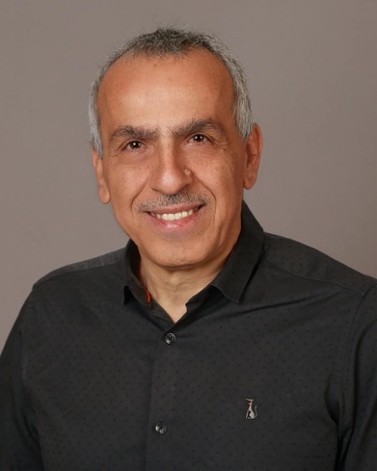 Biography: Ziyad Hanna is a distinguished global technology executive, computer scientist, and AI leader, with more than 35 years of experience shaping the fields of electronic design automation and artificial intelligence. As a Corporate Vice President of Cadence Design Systems, and R&D General Manager, leading the company’s technology innovations and global business with focus on software and AI technologies for the worldwide chip design industry. In 2025, Ziyad Hanna was appointed to lead Cadence’s global artificial intelligence strategy, a role that underscores the company’s deep trust in his visionary leadership and technical excellence. As the strategic head of AI at Cadence, Ziyad is responsible for shaping and executing the company’s direction in artificial intelligence—driving innovation across global teams, identifying transformative opportunities, and steering technological advancement in one of the most critical areas of the future chip design ecosystem. His leadership in this role is pivotal to Cadence’s evolution as a front-runner in AI-driven design and verification technologies. Prior to Cadence, he was the Sr. Vice President, Chief Scientist and General Manager of Jasper the first startup company that made its way to exit and managed by an Arab Israeli General Manager. While being a US permanent resident and leading the company from the Silicon Valley, Jasper earned the Red Herring Top 100 North America award in 2013 and was acquired by Cadence in June 2014. Prior to joining Jasper, Ziyad was Senior Principal Engineer and Group Leader in the Design and Technology division at Intel Haifa. He played a key role in developing computer aided design (CAD) systems that were deployed across nearly all Intel microprocessor designs since the early 1990s. A senior IEEE member and a lecturer in the EECS department at the Technion Israel, Ziyad is very active in the Hi-Tech field and has participated in many international conferences and workshops. He has published more than 30 articles, earned 25 patents, and gave hundreds of talks, a frequent keynote speaker, and respected advisor in various fields in computer science and chaired conferences including the annual Jasper User Group (JUG) for 15 consecutive years. Ziyad received numerous awards including Intel’s highest achievement award twice, and Cadence move-the-needle award. He obtained his bachelor’s and master’s degree from Tel Aviv University, and PhD in computer science from Oxford University in England, where he serves as a visiting professor in the computer science department. Ziyad is very active to foster the Hi-Tech in the Arab community. Ziyad was ranked number 39 in The-Marker’s 100 most influential people on the Israel life for year 2019, top the list in the Hi-Tech category. Also, received honorable doctorate from Rubin collage, and his name was included in the list of the most influential people in Hi-Tech by both The-Marker and People and Computers magazines.
Keynote #2: Learning from Biology - Neuromorphic Techniques for an Intelligent Vision System: Using Obstacle Avoidance as an Example
Kea-Tiong (Samuel) Tang
National Tsing Hua University, Taiwan
Abstract: Massive computation, data, and power consumption limits the deployment of artificial intelligence on edge devices. Key technologies based on neuromorphic computing provide solutions to edge computing, which is essential to develop the next generation AI chip. In this talk, neuromorphic techniques including model, architecture, and sensing will be discussed. These techniques will be demonstrated on a microdrone platform for the task of obstacle avoidance.
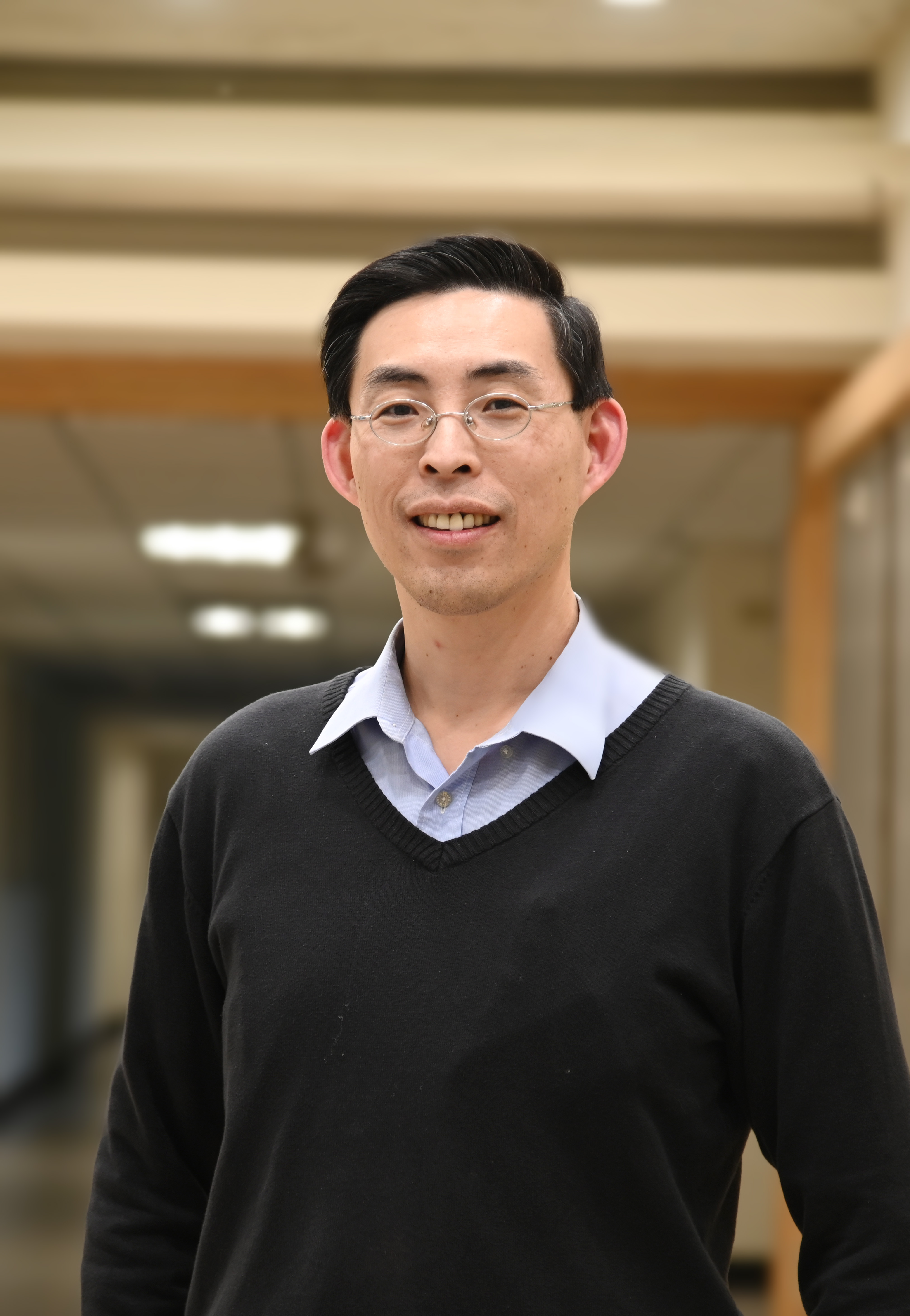 Biography: Dr. Kea-Tiong (Samuel) Tang received the B.S. degree in electrical engineering from National Taiwan University, Taiwan in 1996, and received the M.S. and Ph.D. degrees in electrical engineering from California Institute of Technology, Pasadena, CA, USA, in 1998 and 2001, respectively.
During 2001–-2006, Dr. Tang was a Senior Electrical Engineer with Second Sight Medical Products, Inc., Sylmar, CA, USA. He designed mixed-signal ASIC for the Argus II Retinal Prosthesis System, which became the first FDA-approved device for retinal prosthesis. Since 2006, he has joined the Electrical Engineering Faculty at National Tsing Hua University, Hsinchu, Taiwan, and is currently a Distingushed Professor. His research interests include bio-inspired learning chip, miniature electronic system, and biomedical implantable prosthetic device. He has actively collaborated with multi-disciplinary researchers and has published more than 300 peer-reviewed journal and conference papers in these research areas. He is a recipient of numerous awards, including Outstanding Young Scholar Award, Wu Ta-You Memorial Award, National Innovation Award, Outstanding Electrical Engineering Professor Award, and the Outstanding Research Award, NSTC.
Dr. Tang is a member of IEEE CASS, SSCS, EDS, and EMBS. He was the Past Chair of IEEE Biomedical and Life Science Circuits Systems Technical Committee (BioCAS). He was the Editor-in-Chief of IEEE Transactions on Biomedical Circuits and Systems (TBioCAS) (2022-2023). He has served as TPC member of ISSCC, IEDM, ASSCC, ISCAS, and BioCAS. He was IEEE CAS Chapter Chair of Taipei Section (2017-2018). He was the Chair of IEEE Taipei Section (2021-2022). He was a Board of Governor (BoG) of CAS Society, serving as Representative of Region 10 (2020~2021). He was the Vice President – Regional Activities and Membership of IEEE CASS (2022-2025). He is the current Vice President – Conferences of IEEE CASS. He was elected for Administrative Committee (AdCom) member for 2026-2028. Dr. Tang is a Fellow of IEEE.
Keynote #3: From FLOPS to Intelligence per Joule: The Case for Adaptive Dataflow
Tulika Mitra
National University of Singapore, Singapore
Abstract: For decades, computing efficiency has been evaluated in terms of FLOPS or FLOPS per watt. Emerging AI workloads are forcing a different question: how much useful intelligence can be extracted from each joule?
In large AI models, sparsity is increasingly necessary to make computation and memory tractable during inference. But exploiting sparsity is not automatically beneficial: the cost of discovering, routing, and orchestrating useful work can rival or exceed the cost of the computation itself. This challenge is amplified as low-precision formats reduce the cost of arithmetic, shifting the bottlenecks toward data movement and control.
In this talk, I will present adaptive dataflow as a foundation for efficient AI systems. Dataflow computing offers a natural way to expose dependences, exploit locality, and coordinate parallel execution. Adaptivity extends this paradigm to sparse, dynamic, and token-driven workloads whose useful structure may emerge only at runtime. I will argue that the central design question is not simply how to make dataflow more flexible, but where adaptivity should be introduced, where static structure should be preserved, and what that division of labor implies for the systems we build next.
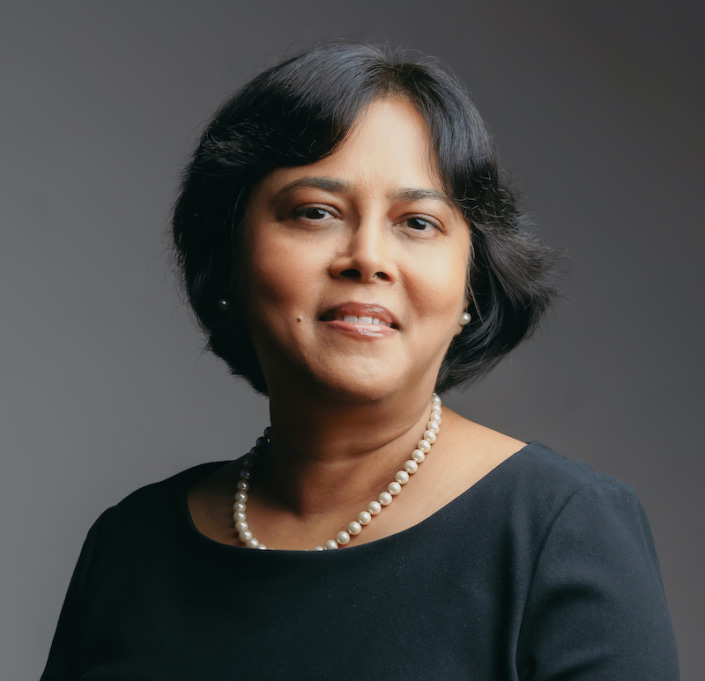 Biography: Tulika Mitra is Provost’s Chair Professor of Computer Science, Dean of Computing, and Vice Provost (Special Projects) at the National University of Singapore. Her research focuses on hardware-software co-designed systems that deliver more intelligence with less energy, while remaining fast, predictable, and reliable. She works on accelerator architectures and compilers, power and thermal management of heterogeneous systems, and worst-case execution time analysis of real-time systems. Her work has received the ESWEEK Test-of-Time Award and multiple Best Paper Awards. She has served as Editor-in-Chief of ACM Transactions on Embedded Computing Systems, General Chair and Program Chair of ICCAD, General Chair of ESWEEK, and is a recipient of the ACM SIGDA Distinguished Service Award.
Keynote #4: From Intelligence to Infrastructure: Building the Global Ecosystem for the Next AI Era
Hong-Viet Le
FPT Smart Cloud, Vietnam
Abstract: AI is shifting from experimental models to mission-critical infrastructure powering real-world applications across industries. The race is no longer just about algorithms. It is about the compute, and increasingly the chips, that power them. This keynote shares FPT’s perspective and real-world experience on the global AI landscape and the strategic choices behind building a full-stack AI ecosystem across various pillars of computing capabilities, technology, and partnership.
 Biography: For more than 15 years with FPT, Mr. Le Hong Viet has held a crucial role in the technology growth of FPT, as well as contributing to the expansion of FPT in the international market. He is currently the CEO of FPT Smart Cloud, a flagship technology subsidiary of FPT that provides a world-class Artificial Intelligence platform and Cloud Computing services. Having pinpointed Cloud Computing and AI to be FPT’s strategic technology, Mr. Viet and FPT experts are focusing on developing 02 core products - FPT Cloud and FPT.AI, throughout three layers: applications within the FPT ecosystem, product and service packages for the market, and valuable resources for the community. Alongside being the CEO of FPT Smart Cloud, Mr. Viet is a prestigious advisor and expert in the field of Artificial Intelligence, Big Data, and Digital Transformation. He is also a senior advisor at FPT Ventures - the start-up investment fund that specializes in Technology.